
Smart Site Selection for Small-Bay Industrial: How to Pick Sites That Actually Work
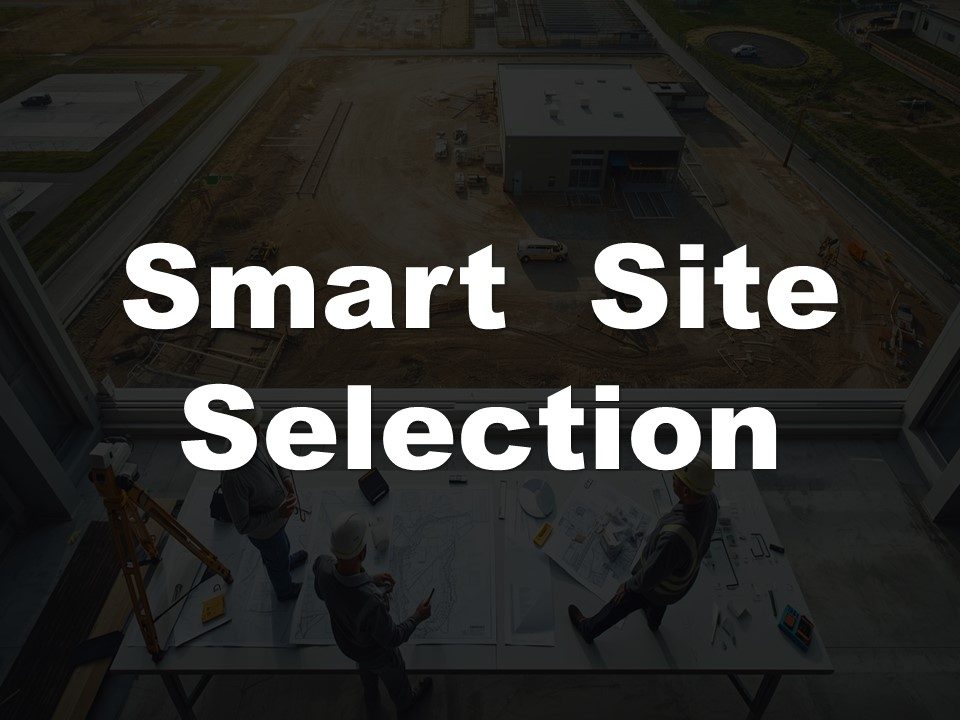
Small-bay industrial and flex parks are exploding in demand—and the biggest wins almost always trace back to one thing: the dirt. Pick the wrong site and you’ll fight it forever. Pick the right one and everything else gets easier: leasing, operations, and your exit price.
Here’s a practical, small-bay–focused guide to site selection best practices, plus how tools like World Engine Analysis and Small Bay Feasibility help de-risk those decisions.
1. Start With the Small-Bay Playbook, Not Generic Industrial
Small-bay industrial isn’t bulk distribution—and your site criteria shouldn’t be either.
Small-bay and flex spaces are usually multi-tenant buildings with smaller units (often ±1,000–10,000 SF per bay) that serve contractors, service businesses, local logistics, showrooms, and small manufacturers
Many of these tenants want:
-
Infill or near-infill locations close to customers and rooftops
-
Simple truck access (box trucks, smaller semis) rather than heavy port freight
-
Good visibility and quick access to highways or main arterials
-
Practical features like fenced yard space, drive-in doors, and light office/showroom
So before you fall in love with a piece of land, get clear on:
-
Who your ideal tenants are
-
How they’ll actually use the space day-to-day
-
What location advantages matter most to them (e.g., proximity to affluent residential, trades, industrial users, or last-mile delivery zones)
That tenant picture becomes the filter for every site you look at.
2. Location & Access: Where Small-Bay Really Wins
For small-bay, you’re not just picking a dot on a map—you’re picking your future rent roll.
Key location drivers:
-
Proximity to population & customers
-
Small-bay tenants often serve a tight radius. Being closer to dense residential and business clusters supports service contractors, showrooms, and last-mile users.
-
-
Highway & arterial access
-
Easy access to major highways and key arterials reduces drive time and fuel cost for tenants, and is a major factor in industrial site selection broadly.
-
-
Labor & business ecosystem
-
Look for markets with healthy small-business creation, trades, and service companies. Industrial site-selection research consistently points to labor and business base as a top factor for success.
-
-
Infill vs. edge-of-metro
-
Infill and near-infill locations often command higher rents and stronger long-term demand, especially for small-bay “last mile”–type uses.
-
If the location doesn’t make sense for the tenants you’re targeting, no level of design brilliance will fix it.
3. Site Characteristics That Make or Break a Flex Park
Once the general location checks out, zoom into the dirt itself. For small-bay industrial, certain physical traits are huge value drivers.
A. Parcel Size, Shape & Frontage
-
Shape: Clean, rectangular sites with enough depth for parking + building + rear yard are far easier to design efficiently than irregular or pie-shaped parcels.
-
Frontage: Good frontage on a main road supports signage, visibility, and future resale.
-
Topography: Flatter sites generally reduce grading and sitework costs and simplify circulation.
B. Circulation, Access & Truck Flow
You want sites that allow:
-
Two access points where possible (safer circulation, easier truck movement)
-
Drive lanes wide enough for two-way traffic with occasional box trucks
-
Clear separation between customer parking and truck/service areas
Industrial site-planning guidance repeatedly highlights transportation access and internal circulation as primary selection criteria.
C. Utilities & Power
You can fix some things. Utilities aren’t one of them—at least not cheaply.
Check early for:
-
Sufficient electric capacity (and ability to upgrade)
-
Water, sewer, and stormwater capacity
-
Gas availability where relevant
Engineering and due-diligence experts flag utility availability and capacity as one of the most critical, and often overlooked, site constraints for industrial development.
D. Zoning & Entitlements
Even a “perfect” site can die in zoning. You want:
-
Zoning that clearly allows light industrial / flex / warehouse uses
-
Parking, outdoor storage, and yard uses that won’t trigger variances
-
A municipality that is generally pro-industrial and familiar with your use
Land-use due diligence checklists universally emphasize zoning compatibility and entitlement risk as non-negotiable early-stage items.
4. De-Risking the Dirt: Due Diligence Essentials
Before you go hard on a contract (or close), you want to know exactly what you’re buying. Thorough due diligence is the cheapest insurance policy you’ll ever get.
Common buckets:
-
Environmental & geotechnical
-
Phase I ESA, and Phase II if needed
-
Soil conditions, fill, potential contamination
-
Floodplain and drainage issues
-
-
Title, easements & encumbrances
-
Hidden easements, access rights, or utility corridors that can destroy your site plan
-
Deed restrictions, use limitations, or covenants
-
-
Offsite & adjacent uses
-
Noxious neighbors (junkyards, heavy industrial, problematic residential adjacency)
-
Planned future uses or infrastructure that could either help or hurt you
-
Recent industrial site-selection guidance calls out subsurface conditions, utility capacity, and nearby land uses as some of the most common “red flag” items that derail projects late in the game.
The goal: no surprises after you’ve poured capital into design and entitlements.
5. Designing for Small-Bay Economics (While You’re Still Choosing Sites)
Good site selection isn’t just “can we fit a building here?” It’s “can we fit the right building here?”
For small-bay, think ahead about:
-
Unit mix & depth. Small-bay industrial is typically made up of smaller suites—often a few hundred to a few thousand square feet per unit—serving numerous local users. The site has to support the bay depth and number of doors you need.
-
Drive-in doors & rear yards. Can you design functional, fenced yards behind the building without compromising parking or access?
-
Parking & car traffic. Showroom-front and office-heavy flex will need stronger parking ratios than simple contractor-grade bays.
-
Expansion or condo potential. Some investors want the ability to convert to condo bays in the future or to add an additional phase if absorption outperforms.
Sites that naturally support these flex-friendly design choices are often more valuable long-term than sites that force awkward layouts.
6. Turning Site Selection Into a System: World Engine & Small Bay Feasibility
Most investors and developers know the basics: location, zoning, utilities, demand. Where things fall apart is consistency. Every site gets evaluated a little differently, with different data sources, different assumptions, and a lot of gut feel.
That’s where tools like World Engine Analysis and Small Bay Feasibility come in.
World Engine Analysis: Data-Rich Mapping for Flex Parks
Within Small Bay Feasibility’s Market & Feasibility Study, World Engine Analysis is a core component—a strategic layer that uses enhanced World Engine technology to evaluate flex and small-bay sites.
World Engine–powered analysis allows you to:
-
Visualize market comps and competitive supply around a site
-
See how demographics, income, and business density line up with your tenant profile
-
Understand real-time demand and pipeline so you’re not building into an oversupplied pocket
-
Standardize core assumptions across multiple sites so you can compare them apples-to-apples
This kind of consistent, objective data is exactly what site-readiness experts recommend: full transparency, standardized data points, and reduced subjectivity in site decisions.
Small Bay Feasibility: From “Looks Good” to “Pencils Out”
Small Bay Feasibility is dedicated solely to small-bay and flex industrial, offering feasibility studies that answer the ultimate question: Does this site really make sense for small-bay?
A typical study includes:
-
Market analysis (demand, tenant base, rent levels, lease-up expectations)
-
Competitor and pipeline review
-
Demographic and business profiling around the site
-
World Engine Analysis for map-based, strategic insight
-
Risk evaluation (market, site, and financial risk)
-
10-year cash-flow modeling and recommendations
In other words, it takes everything you should be doing in site selection and turns it into a clean, standardized decision tool—backed by a team entirely focused on flex and small-bay industrial.
7. Pulling It All Together
When you zoom out, smart site selection for small-bay industrial comes down to a few big ideas:
-
Start with tenants and use case, not just cheap land.
-
Prioritize access, infill demand, and labor/business ecosystem that match your tenant base.
-
Pick sites that physically support good small-bay design—rectangular shapes, workable circulation, parking, doors, and yards.
-
De-risk early with real due diligence: environmental, geotech, utilities, zoning, and title.
-
Systematize your decisions using tools like World Engine and Small Bay Feasibility so every site is evaluated with consistent, data-backed criteria.
Do those things, and you’re not just buying land—you’re laying the foundation for a flex park that leases faster, operates cleaner, and sells better when it’s time to exit.