
The Power of Rear Storage Yards in Small-Bay Industrial
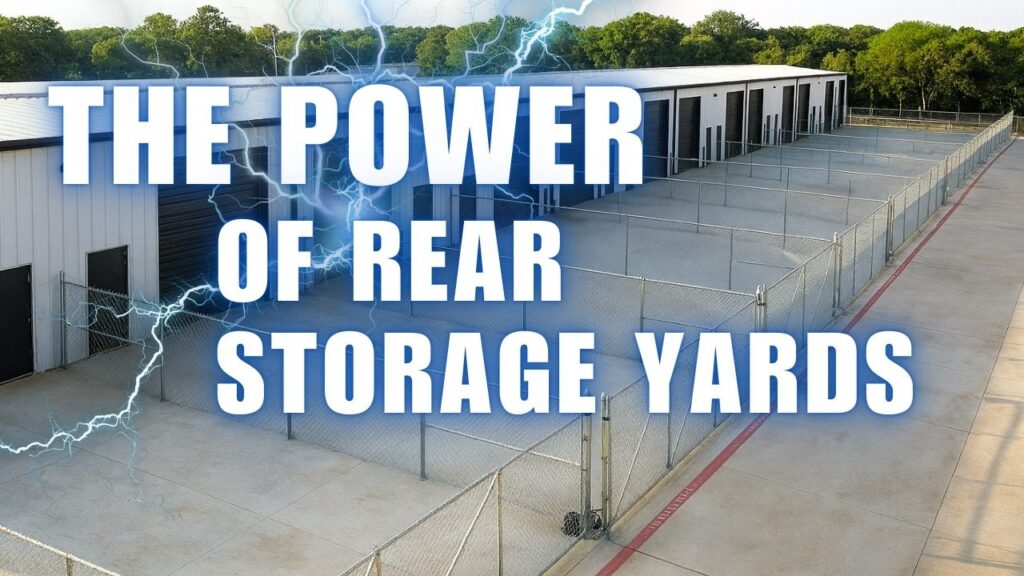
Why This Underrated Amenity Drives Demand, Rent, and ROI
In the small-bay industrial world, there’s one amenity that consistently punches above its weight: rear storage yards. While flashy façades and premium office finish-outs get attention, it’s often the outdoor storage component that seals the deal—especially in rural markets and subcontractor-heavy regions across the U.S.
Today’s flex-space tenants are operating in leaner, faster, more equipment-intensive environments than ever. And that makes private, secure, dedicated yard space one of the most valuable features a property can offer.
Industry Insight: The Real Impact on Rents and Retention
“We’ve seen rear storage yards become a game-changer—not just for leasing velocity, but for higher rents and stronger tenant retention. Some of the parks we’ve sold with rear or side yards are achieving 20–30% higher rents and maintaining occupancy well above the market.”
— Cody Payne
The data backs it up: rear yards consistently drive better leasing, stronger tenant loyalty, and higher returns.
Why Rear Yard Space Matters More Today
Rear storage yards used to be viewed as a “nice addition.” Now, they’re becoming a must-have for a growing portion of the tenant base. The surge in trades, logistics, fabrication, small contractors, mobile service operators, and construction support companies has created unprecedented demand for outdoor storage.
Many of these users don’t just want yard space—they require it to function.
Rear yards allow tenants to:
-
Store materials, work trucks, trailers, equipment, and bulk items
-
Stage projects without cluttering their interior space
-
Keep operations secured behind fencing and gates
-
Scale operations without needing larger interior units
-
Reduce off-site storage costs and operational inefficiencies
For these businesses, rear yards turn a flex unit into a true operations hub.
A Competitive Advantage in Rural and Subcontractor-Driven Markets
If you look at high-performing parks in smaller markets—rural Texas, Oklahoma, Alabama, Tennessee, the Carolinas—you’ll find one common thread: rear yards lease faster and stay leased longer.
Why? Because these markets are powered by:
-
HVAC Companies
-
Electricians
-
Plumbers
-
Oilfield services
-
Roofing companies
-
Solar installers
-
Land services
-
General contractors
-
Heavy subcontractor networks
These groups rely heavily on equipment and outdoor storage. Without yard space, they’re forced into improvised solutions—off-site yards, unsecured lots, or oversized units that cost more but offer less utility.
When a flex park is designed with wide rear yards, clear access, and fenced-in private areas, it immediately becomes the top option in the region.
A Competitive Advantage That Increases Rents and Value
Rear yard space doesn’t just help leasing—it boosts income, tenant retention, and overall asset value.
Developers and owners who include rear yards see:
-
Higher rents per unit (yard-space premium)
-
Lower turnover, since yard-dependent users rarely move
-
Faster lease-up, especially in non-metro markets
-
Higher buyer demand, due to stronger cash flow and tenant diversity
-
Better NOI scalability, with passed-through expenses and yard fees
In many markets, rear yards can add 10–25% more revenue per unit without materially increasing construction cost. That’s one of the highest ROI amenities you can add.
How Rear Yards Influence Leasing Velocity
When a tenant tours a small-bay industrial park, the moment they see secure outdoor storage, they immediately start picturing how efficiently they can operate.
It solves pain points they’ve had for years:
-
Crowded interiors
-
No place for trailers
-
No secure space for materials
-
No room for job staging
-
Equipment clogging parking areas
Rear yards eliminate those bottlenecks—making the unit “ready to work” on day one.
That’s why parks with rear yards often outperform those without them, even when located on the same road.
The Flex Space Secret More Developers Are Catching On To
In rural areas and subcontractor-driven economies, rear yards are no longer optional—they’re the secret weapon for attracting the strongest tenants and creating long-term, stable industrial income.
As small-bay industrial continues to expand nationally, more developers are realizing:
-
It’s not the lobby that matters
-
It’s not the fancy trim
-
It’s not oversized office space
It’s functional space—both inside and out.
Rear storage yards give a park a competitive edge that’s hard to replicate and nearly impossible to beat.
Final Takeaway
Whether you’re building, buying, or repositioning small-bay industrial, rear storage yards might be the highest-impact, lowest-cost upgrade you can make. They drive demand, help tenants operate more efficiently, and significantly boost long-term value—especially in markets where trades and subcontractor activity are the backbone of the local economy.
For owners who understand their tenant base, rear yards aren’t just an amenity—they’re a strategic advantage.